


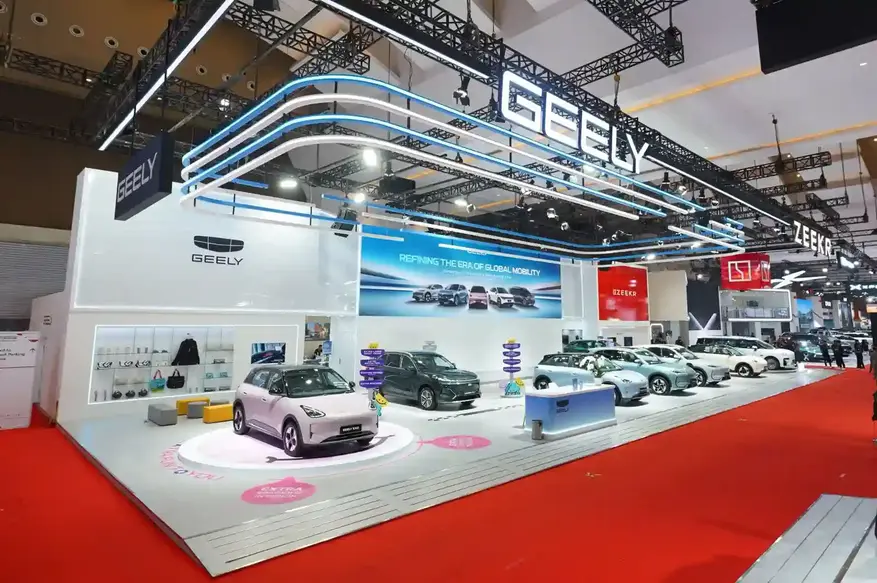
The automotive landscape in China, a bellwether for global industry trends, has recently witnessed a significant reordering at its pinnacle. BYD, long recognized for its aggressive market expansion and technologically advanced offerings, has ceded its position as China’s leading passenger car manufacturer. Our observation, based on recent market data, indicates that Geely has surged ahead, claiming the top spot.
This shift comes amidst a broader deceleration within the Chinese passenger car segment during January 2026. The China Passenger Car Association (CPCA) reported a retail sales volume of 1.544 million new units for the month, marking a notable 13.9 percent year-on-year (YoY) decline. This figure also represents a substantial drop of nearly one-third compared to the industry’s performance in December 2025. Such a contraction suggests a more challenging operating environment for all players, making Geely’s ascent even more remarkable.

Geely’s Dominance in a Challenging Market
Data from CarNewsChina highlights Geely’s robust performance across both retail and wholesale channels. In January 2026, Geely’s retail sales reached an impressive 210,000 units, outpacing competitor BYD by nearly 80,000 units. From a wholesale perspective, Geely further solidified its lead with 270,000 units shipped, approximately 60,000 units more than BYD, which now ranks second.
Conversely, BYD faced significant headwinds. Its retail sales experienced a sharp decline of 53 percent YoY, plummeting from around 200,000 units in January 2025 to just 94,000 units in the same month of 2026. Wholesale figures for BYD also saw a substantial 30.7 percent YoY decrease, settling at 206,000 units. This dramatic shift underscores the volatility inherent in dynamic markets and the constant competitive pressures faced by even established leaders.
Strategic Drivers Behind the Market Reversal
Analysts suggest that Geely’s proactive and aggressive expansion strategy has been a key factor in its recent success. The company has articulated ambitious plans for 2026, targeting the launch of one to two new models each quarter, with an overarching annual sales goal of 3.45 million vehicles. This consistent cadence of new product introductions appears to resonate with consumers and bolster its market share during a period of overall slowdown.
Beyond the top two, the broader Chinese automotive landscape remains intensely competitive. The combined wholesale sales of the ten largest automakers in China amounted to 1.168 million units in January, representing close to 60 percent of the total market volume. While Geely led with a 1.3 percent YoY growth, Chery secured the third position with 194,000 units. These three manufacturers collectively command over 30 percent of China’s passenger car market. Notably, SAIC Motor also reported a significant 53.6 percent YoY jump in wholesale sales, largely propelled by the strong export performance of its MG brand, indicating diversified growth avenues for some players. Tesla China also registered positive momentum, with wholesale sales reaching 69,000 units, marking a 9.3 percent YoY increase.
Global Implications and Local Opportunities
The intensifying competitive pressures within China’s passenger vehicle market are likely to spur both domestic and global manufacturers operating in the region to pivot towards more aggressive overseas expansion. This strategy could manifest in several ways: competitive pricing, accelerated introduction of new models, and increased localized investment in key international markets, including Southeast Asia.
For countries like Indonesia, this dynamic presents a dual-edged sword. On one hand, consumers stand to benefit from heightened competition, particularly within the burgeoning electric vehicle (EV) segment, which could translate into more accessible pricing and a broader range of options. On the other hand, the influx of highly competitive products may exert significant pressure on local automotive manufacturers, potentially accelerating market consolidation and challenging domestic industry growth.
In response, policymakers and industry stakeholders in Indonesia will need to craft strategic interventions. This includes bolstering the local manufacturing ecosystem, clarifying and streamlining incentives for EV adoption, and ensuring that any incoming foreign investment facilitates optimal technology transfer. Such measures are crucial to position Indonesia not merely as a consumer market but as a robust production hub within the global automotive supply chain, thereby harnessing the opportunities while mitigating the challenges of this evolving landscape.