


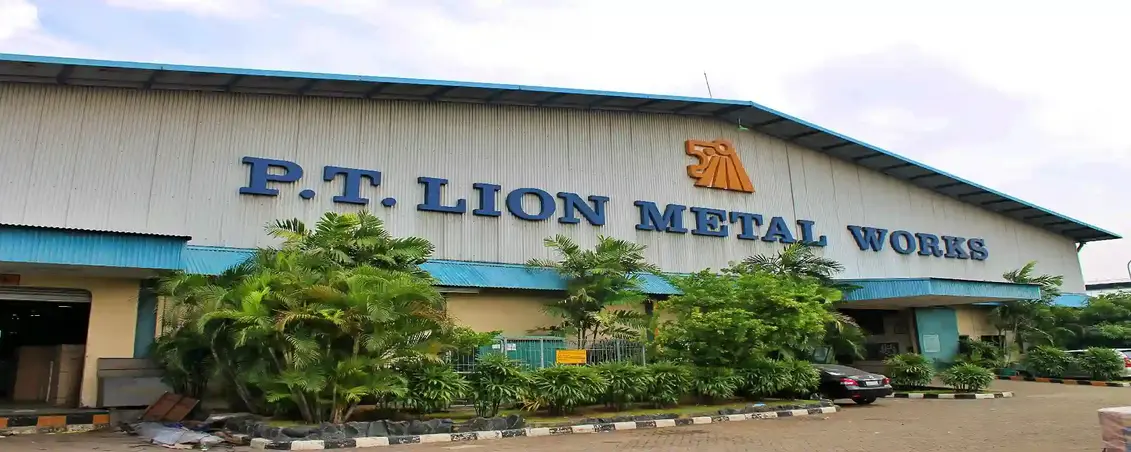
PT Lion Metal Works Tbk (LION) recently concluded its Public Expose on 13 Februari 2026, revealing a challenging period marked by a significant sales dip. Our observation suggests this decline is primarily driven by intense market competition, particularly from imported products originating from China, alongside the inherent volatility in raw material prices, especially steel. These external pressures have demonstrably impacted LION’s operating margins, painting a picture common across the manufacturing sector.
While 2024 saw a boost from significant orders for cable ladder products, 2025 presented a different scenario with a notable drop in demand for these same products, subsequently affecting overall turnover. Despite these headwinds, the management projects a more optimistic outlook for 2026, forecasting revenues of Rp468 billion and a net profit of Rp20.8 billion. This ambitious projection is set against the backdrop of anticipated improvements in both global and domestic economic conditions.

Navigating Industry Headwinds: LION’s Operational Evolution
In response to the prevailing market dynamics, LION is rolling out a multi-pronged operational strategy across its three core divisions: Cable Ladder, Fire Door, and Racking systems. This approach emphasizes efficiency and enhanced productivity through technological adoption. For its racking division, the company plans to integrate automated systems and forge partnerships with Chinese counterparts, a strategic move aimed at boosting production efficiency and simultaneously reining in operational expenditures.
Furthermore, the focus remains sharply on optimizing production costs and fortifying the supply chain, critical actions to mitigate the challenges inherent in the industrial services sector this year. These operational adjustments are complemented by a substantial capital expenditure (capex) allocation ranging from Rp2 billion to Rp5 billion. This investment is specifically targeted at digitalizing production lines through the acquisition of advanced laser cutting machinery and robotic welding systems. Such modernization efforts are designed to significantly increase output and achieve long-term reductions in labor costs.
Separately, PT Singa Purwakarta Jaya, a related entity, continues its efforts to sell land in Purwakarta at market value. The expansive land in the Lion Industrial Estate, approximately 100 hectares, is intended to support infrastructure development. The timeline for this land sale will be synchronized with prevailing market conditions, indicating a prudent approach to asset management.
Financial Performance Under Scrutiny: Q3 2025 Snapshot
Examining LION’s financial health, management maintains that the company faces no liquidity issues or cash flow difficulties, despite a year-on-year reduction in total assets and liabilities. This decline in assets is attributed to a reduction in liabilities and dividend payouts, rather than operational liquidity pressures. However, our analysis of the Q3 2025 financial report indicates considerable pressure on revenue, margins, and net profit, reflecting the challenging industry environment and fluctuating raw material costs.
Total revenue for Q3 2025 stood at Rp67 billion, a decline from Rp81 billion in Q2 2025 and Rp95 billion in Q1 2025. This figure also trails behind the Rp132 billion recorded in Q4 2024 and Rp75 billion in Q3 2024. The revenue contraction led to a squeeze on gross profit, which was Rp17 billion in Q3 2025, down from Rp24 billion in Q2 2025 and significantly lower than Rp51 billion in Q4 2024. Cost of goods sold for Q3 2025 was Rp50 billion, with total operating expenses reaching Rp23 billion.
Operationally, LION recorded an operating loss of Rp5 billion in Q3 2025, following losses of Rp1 billion in Q2 2025 and Rp27 billion in Q1 2025. This contrasts with operating profits of Rp12 billion in Q4 2024 and Rp4 billion in Q3 2024. The company’s pre-tax profit and net profit for Q3 2025 were both losses of Rp3 billion. Cumulatively, LION reported sequential net losses of Rp16 billion in Q1, Rp6 billion in Q2, and Rp3 billion in Q3 2025. Key ratios such as EPS (minus 6.34), PE ratio (negative 107.26), EBITDA (negative Rp3.23 billion), ROA (minus 0.54%), and ROE (minus 0.70%) further underscore the financial pressures experienced during the period.
Market Reaction and Broader Implications for the Industry
The market’s reaction to LION’s performance has been dynamic. On February 13, 2026, the share price closed at Rp520, experiencing a 6.31 percent drop. Over the past week, the stock corrected by 26.76 percent, although it still registered a 17.65 percent gain over the last month. Transaction values on the last trading day reached approximately Rp1.3 billion, with a volume of 26.62 thousand lots at an average price of Rp499 per share.
LION’s situation provides a pertinent case study for young investors and professionals tracking the Indonesian manufacturing sector. The company’s strategic pivot towards digitalization and automation, backed by substantial capital expenditure, reflects a broader trend crucial for industrial survival and growth. As companies navigate the twin challenges of global competition and domestic economic fluctuations, the ability to adapt, innovate, and optimize operations through technology becomes paramount. This shift, if executed effectively, could not only stabilize LION’s future performance but also serve as a blueprint for other manufacturers grappling with similar pressures. The emphasis on capex for growth and efficiency is a clear signal of the evolving competitive landscape.
Berita atau informasi yang Anda baca membahas emiten atau saham tertentu berdasarkan data yang tersedia dari keterbukaan informasi PT Bursa Efek Indonesia dan sumber lain yang dapat dipercaya. Konten ini tidak dimaksudkan sebagai ajakan untuk membeli atau menjual saham tertentu. Selalu lakukan riset mandiri dan konsultasikan keputusan investasi Anda dengan penasihat keuangan profesional. Pastikan Anda memahami risiko dari setiap keputusan investasi yang diambil.